

Invoice Management Made Fun (Innovations of 2026)22 min read
Reading Time: 8 minutesWhile invoice management may seem like a tedious and tiring process for most businesses, you can make it much more practical if you use the right methods. Paper invoices can get lost, be processed late, and be difficult to track.
To avoid this situation and dealing with piles of files, you can switch to digital solutions. With digital solutions, you say goodbye to paper chaos. Simplifying the process saves you time. Furthermore, you can maintain control over your expenses.
Quick Note ↵ With digital invoice management, you also have the chance to collect your invoices on a single screen. You can prevent delays with automatic categorization and notifications. Thanks to online invoice management solutions, you upload your invoices very quickly.
You can create approval workflows and automate reporting. When you implement these steps, invoice tracking becomes more organized. You can also speed up your accounting process and completely reduce unnecessary paperwork in your business.
You don’t have to get lost in piles of paper. With the right systems in place, invoicing processes become truly enjoyable.
Instead of searching for files, manually entering records, and waiting for approvals, you can see everything on a single screen. This allows you to speed up your entire invoicing process.
With the best platforms for invoice management, you have the chance to automatically categorize your invoices. You can also archive your invoices and find them in seconds. This way, you say goodbye to paper clutter and make your financial processes more organized.
You can define notifications for payment dates and let the system manage recurring transactions. By following these steps, you will achieve your goal of managing invoices and payments efficiently.
What is invoice management and why is it important for businesses?
Business invoice management is the process of systematically collecting, verifying, approving, recording, and paying invoices received and issued by a business.
Failure to manage this process correctly can lead to the loss of invoices, delays in payment, and unexpected errors in accounting records. Therefore, invoice management helps maintain a business’s cash flow and financial discipline.
A well-organized system improves budget control and reduces the operational burden on your business. Invoice management for businesses because it allows for accurate cost tracking, tax compliance, and financial reporting.
A well-organized system also increases visibility across all departments and helps your finance team make faster decisions. When invoices are tracked in one place, you can instantly see what is paid, what is pending, and what is overdue.
This strengthens cash flow planning and prevents unexpected gaps in your budget. As a result, your business operates with more financial stability and fewer last-minute payment issues.
Using invoice management software allows you to manage your invoices from a single screen. You can automatically categorize and speed up approval processes. Automated invoice processing eliminates manual data entry. Digital input reduces the risk of errors and prevents payment delays.
How can digital tools make invoice management easier and more enjoyable?
Using digital tools can make invoicing processes faster, more organized, and less stressful. Manual invoicing can lead to problems like lost documents, delayed approvals, and messy email chains.
By using digital solutions for invoice tracking and management, you can monitor invoices from the same application. You can track payment deadlines without missing them and automate reporting.
Making the process visual and systematic prevents invoice management from becoming a “paper job.” This results in an easily controllable workflow.
To make this experience more enjoyable, you can use an invoice management platform and digital banking for invoice management together.
Your invoice management with digital tools can be as follows:
- Eliminate clutter by gathering invoices in a single panel.
- Avoid missing payment deadlines with automatic reminders.
- Speed up invoice approvals within the team by setting up approval workflows.
- Reduce manual data entry with OCR (automatic reading).
- Make expense control easier by categorizing items.
- Make payments with a single click thanks to bank integration.
- Reporting screens allow you to instantly see how much you’ve spent on each expense.
- Automatically tag cyclical expenses to simplify budget planning.
- Increase control and prevent erroneous payments with authorization and limits.
- Archiving lets you find past invoices in seconds and prepare them for audit.
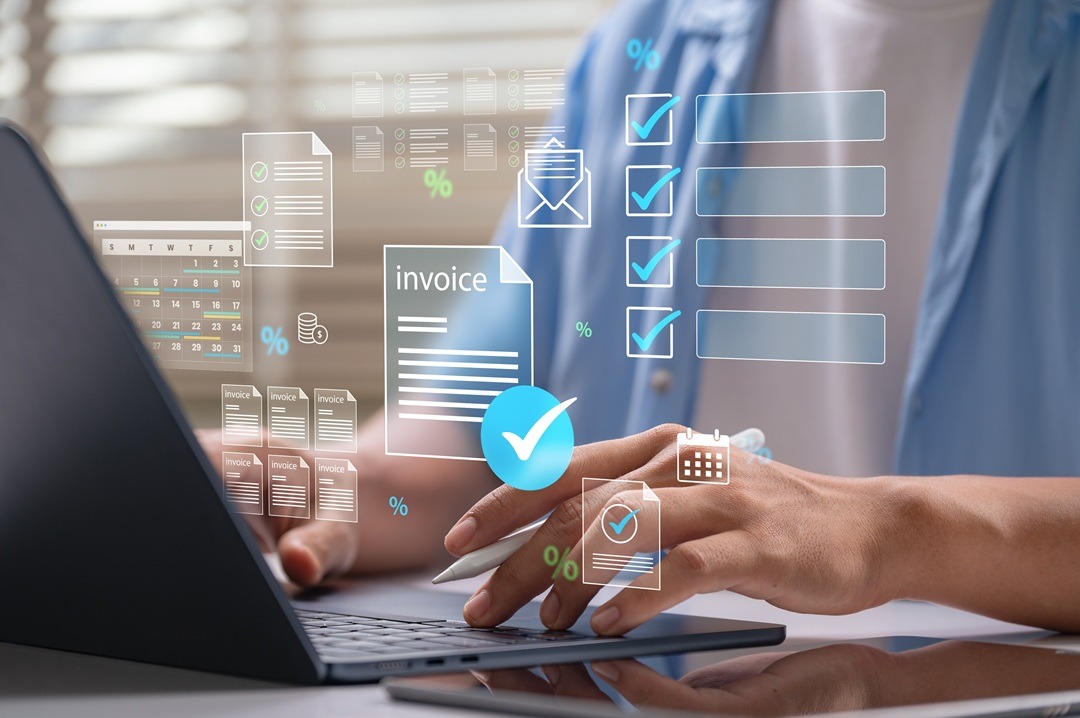
What are the common challenges of paper-based invoicing?
When you use paper-based invoicing, processes slow down and control becomes difficult. Physically transporting, filing, and manually entering invoices into the system wastes time. The likelihood of errors is also significantly higher.
In paper-based invoices, the approval process between different departments can be lengthy, leading to delays. This results in missed payment deadlines. For businesses, digitizing invoice management processes offers advantages in terms of both speed and visibility.
The challenges of paper-based invoicing are:
- Increased risk of lost or incorrectly filed invoices.
- Higher error rate due to manual data entry.
- Slower approval processes and potential delays.
- Archiving space and physical storage costs.
- Difficulty accessing invoices remotely, reducing team coordination.
- More cumbersome auditing and reporting processes.
- Delays in collection tracking in accounts receivable and invoice management processes.
- Complexity of permission, signature, and approval tracking, weakening process control.
You can leverage cloud-based invoice management solutions to mitigate these problems. You can speed up approval processes with invoice workflow automation.
How does automating invoices reduce errors and save time?
Automating invoices significantly reduces errors because it minimizes manual data entry. Information such as amounts, dates, IBANs, or currencies entered manually can easily be misspelled, leading to payment delays or incorrect payments.
When using automation, invoices are read, categorized, and recorded by the system. This process speeds up invoice approval and processing, relieving finance teams of the burden of constant checking.
Furthermore, automation significantly reduces processing times, resulting in substantial time savings. To answer the question, “how to manage invoices digitally?”, you can track all developments under a single heading.
If you work with many different countries, multi currency invoice management allows you to view exchange rate differences and currency-based reports more regularly. Supporting the process with secure invoice management tools protects your data and speeds up invoice processes.
Can cloud-based invoicing help businesses go paperless?
Yes. Cloud-based invoicing can powerfully help businesses go paperless. Because invoices are stored and archived digitally instead of as physical files, they can be found in seconds when needed.
This system minimizes the risk of invoice loss. It also reduces the burden of manual processing for your staff. Teams can access the same documents even remotely.
The cloud-based structure also allows you to track payments more systematically.
How do recurring invoices simplify payment processes?
Recurring invoices standardize the process because you pay the same supplier or service every month. These invoices reduce manual workload because you don’t have to enter new invoices each time. Furthermore, actions like checking and tracking payment dates are time-consuming.
Automating these payments can reduce the risk of delays, eliminating the need for constant monitoring. Automated systems speed up invoice approval and processing steps, allowing your finance team to work more efficiently.
Digitalizing the process will also increase your control over payments. Let’s look at how to manage invoices digitally. Digital management allows you to automatically identify recurring invoices.
You can set up payment reminders in the digital system and manage your budget more predictably. You can apply transaction limits with secure invoice management tools. You maintain control using practical approval workflows and notifications. You also make the entire process seamless.
What role do reminders and notifications play in modern invoicing?
With reminders and notifications, you can prevent delays in modern billing. This allows you to manage payment processes more effectively, as missed payment dates result in late payment interest. Furthermore, you may experience problems in supplier relationships and cash flow pressure.
Thanks to notification systems, you can instantly see invoices awaiting approval, allowing you to take timely action. Your accounts receivable and invoice management processes will be faster, strengthening your business’s financial stability.
Notifications become even more critical when combined with automation. Reminders defined within invoice workflow automation allow you to see the status of an invoice, enabling automatic forwarding to the correct recipient.
Tip ↵ If you work with different countries, you can manage multi-currency invoice management, making it easier to track currency-based payment dates and exchange rate fluctuations.
How can businesses track overdue invoices effectively?
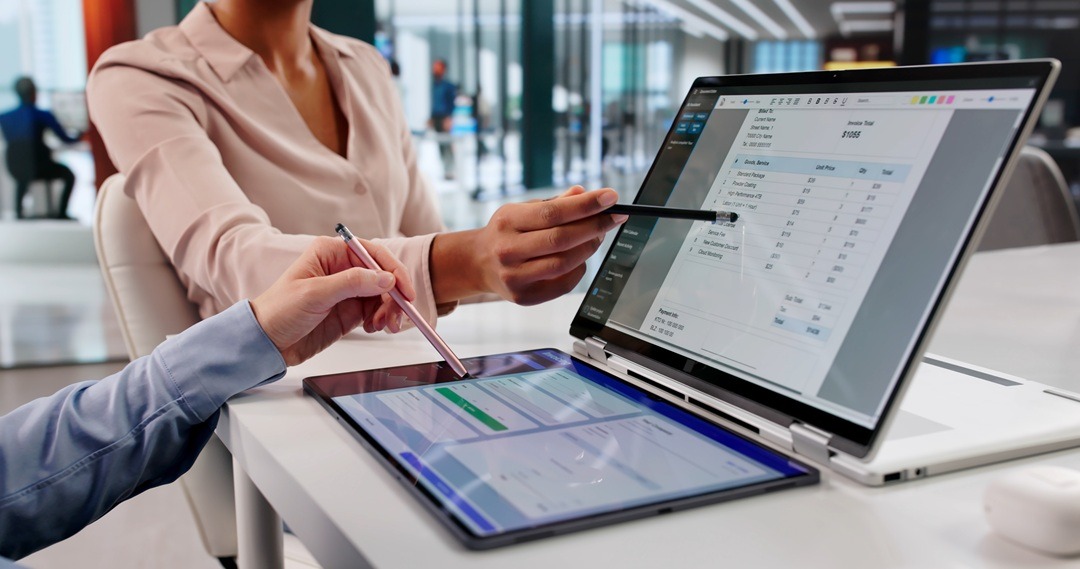
If businesses want to effectively track overdue invoices, they must make the process visible from a single center. Manual tracking can lead to overlooking invoices, and as collections are delayed, your cash flow weakens.
In invoice management for businesses, you can automatically track due dates. In case of delays, you can send notifications to the responsible person, initiating a reminder flow for the customer. This results in more successful collections and reduces the impact of delays.
To manage the process more effectively, you can integrate digital infrastructure with payment processes. If you use digital banking for invoice management, you can match bank collections with invoices. In this case, you can instantly see who paid and quickly identify outstanding invoices.
Tip ↵ With cloud-based invoice management, your entire team can access the same data. This allows you to filter overdue invoices and automatically generate reports.
Are integrated accounting systems helpful for managing invoices?
Integrated accounting systems can significantly aid in invoice management. If invoices are processed manually, errors can occur in fields such as amount, date, customer information, or currency.
Using integration allows for automatic recording of invoices, making the process more organized.
If your business handles a high volume of transactions, automation saves time and reduces the workload for finance teams. Combining the process with cloud-based invoice management makes team coordination easier. You also have the ability to access invoices remotely.
This speeds up the approval process for remotely accessed invoices. Furthermore, you can automate reporting.
Additionally, since different departments see the same data, you avoid the risk of processing incorrect information.
For businesses, invoice management processes can become more transparent and controlled. Digital banking integration provides a significant advantage for invoice management on the payment side.
You can match bank transactions with invoices, instantly seeing which invoices have been paid and identifying delays earlier.
How do electronic payments make invoice processing faster?
Electronic payments speed up your invoice processing because they minimize manual steps in the payment process. These systems make invoice processing instantaneous. Paper or manual payment methods involve lengthy approval, transfer, and registration processes.
With electronic payments, the payment is completed within minutes. This eliminates delays in the invoice management process.
It increases the collection speed for your business. Furthermore, the system automatically creates a record when a payment is received. This also speeds up your control and reconciliation process.
The process becomes even more efficient when combined with digital invoice management. Online invoice management solutions allow you to automatically generate invoices, add payment links, and see the invoice status automatically updated once the payment is completed.
Invoice management innovations for 2026
Invoice management in 2026 is evolving rapidly due to AI, automation, and global e-invoicing regulations.
Here are the key developments shaping the industry:
1 – AI-Powered Invoice Processing
Companies are increasingly using artificial intelligence to automate invoice capture, validation, approval workflows, and exception handling. AI systems can now extract invoice data with very high accuracy and reduce manual work significantly.
2 – Touchless Invoice Automation
Touchless processing has become a major goal in 2026. Businesses want invoices to move through the entire workflow without human intervention, from receipt to payment approval.
3 – Mandatory E-Invoicing Expansion
Governments worldwide are accelerating mandatory electronic invoicing regulations. Countries in Europe and the Middle East are introducing stricter digital tax reporting and real-time invoice clearance systems.
4 – Real-Time Financial Visibility
Modern invoice management platforms now provide real-time dashboards, cash flow forecasting, and payment tracking. Finance teams can make faster decisions using live data analytics.
5 – AI Fraud Detection and Compliance Monitoring
Advanced invoice systems can automatically detect duplicate invoices, suspicious transactions, and compliance risks using machine learning models.
6 – Integration with ERP and Cloud Systems
Invoice management tools are becoming deeply integrated with ERP platforms such as SAP, Oracle, and Microsoft Dynamics. Cloud-based systems are now preferred because they offer scalability and remote accessibility.
7 – Faster Payments Through Digital Methods
Businesses are shifting toward ACH transfers, virtual cards, and real-time payment systems to speed up supplier payments and improve cash flow management.
8 – LLM and OCR Technologies for Invoice Extraction
Large Language Models (LLMs) combined with OCR technologies are improving invoice data extraction accuracy, even for complex or poorly scanned documents.
9 – Predictive Analytics and Smart Recommendations
Invoice platforms now use predictive analytics to forecast late payments, recommend payment schedules, and optimize working capital strategies.
10 – Focus on Sustainability and Paperless Operations
Businesses are reducing paper usage and moving toward fully digital invoice ecosystems to improve sustainability and operational efficiency.
The Kingdom Bank Invoice Management Software
Using automated invoice processing and invoice management software eliminates manual data entry. Without manual entry, the risk of errors decreases, and you can generate instant reports.
By following these steps, you will speed up your invoice processing. You can implement automated invoice processing with The Kingdom Bank.
With The Kingdom Bank invoice management, you’ll get rid of the hassle of paperwork.
About The Author

Legal Disclaimer: The Kingdom Bank is licensed and authorised by the Financial Services Unit, Ministry of Finance of the Commonwealth of Dominica, licensed as a banking institution under the International Banking Act, fully authorised to provide services to clients worldwide, under the prudential supervision of the Financial Services Unit. thekingdombank.com operates under a licence granted by the Commonwealth of Dominica and provides its services to customers under this licence.