
Shaping the Future of OTC Trading for Digital Assets21 min read
Reading Time: 8 minutesWe will be discussing shaping the future of over-the-counter (OTC) trading for digital assets. We will explain the points you are curious about in our article.
Short Summary ↵ OTC trading can be referred to as private trades between large buyers or sellers. The term means over-the-counter trading, and it is widely used by companies and high-net-worth individuals.
The future trends of OTC crypto trading are not just about the costs or prices but about the infrastructure of the system as a whole.
This article covers everything to know about trends that shape the future of OTC trading.
With the rise of institutional adoption of crypto, the market is pushing for a more regulated and sophisticated way to exchange.
As of 2025, exchange-based trading and the services it offers are not enough for institutions and high-net-worth individuals.
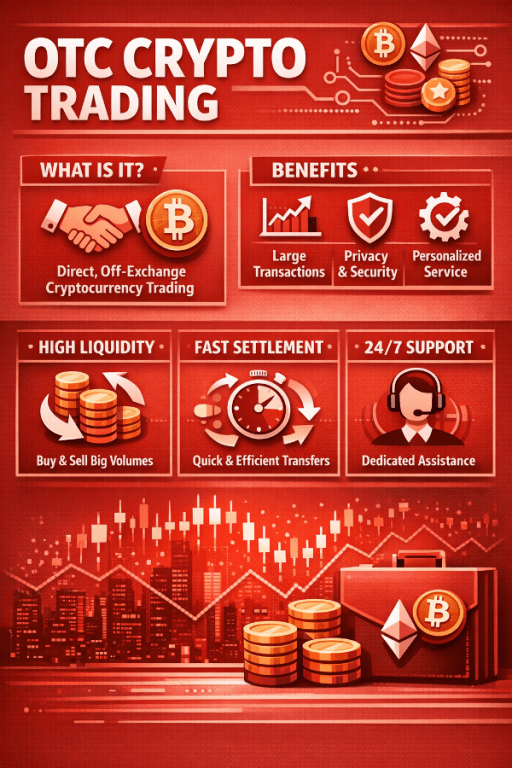
That is where OTC trading comes in handy. Since services offered by the OTC desk include personalized services, large block trades without slippage, and privacy, its usage has become very common and attractive.
Tip ↵ This article covers everything one must know about over-the-counter trading.
What Is OTC Trading for Digital Assets and Why Is It Important?
As mentioned above, the term stands for over-the-counter trading. The key difference from other cryptocurrency exchanges is that it typically involves large transactions.
OTC trading services are commonly used by institutional investors and high-net-worth individuals.
Here’s the importance of it:
- Liquidity- When a large transaction is made, exchanges move the market price. However, OTC doesn’t allow this by matching buyers off-exchange.
- Privacy- The deals are not visible on the order book, so discretion when moving funds is a big plus.
- Market Efficiency- The market is not affected when OTC is in place since it helps keep the ecosystem liquid.
OTC, in today’s world, is not just a niche thing but a necessity for digital finance, especially when talking about OTC trading for high-net-worth individuals or institutions.
How Is OTC Trading for Digital Assets Evolving in 2025?
When it comes to OTC trading for digital assets, one must know that it is not static. The transformation has already started. As of 2025, there is a growing institutional adoption, making the whole system prone to shifts.
Here’s what you should know:
- Market Growth- More institutions, family offices, and even traditional banks are entering OTC trading crypto exchanges. This makes the OTC desk more structured, thus making it look more like traditional banking.
- Technological Upgrades- When it comes to the subject of the OTC trading platform, one can confidently say that it is becoming more electronic, and it is moving away from phone calls and chat-based deals to digital support and automation
- Regulation- OTC trading for digital assets now must comply with tighter KYC and AML rules. Rules are expected to get more rigid since regulators want more reporting and transparency.
As of 2025, and in the expected future, OTC is now more professional and regulated.
To learn all about the benefits of using an OTC desk and the advantageous routes we offer, visit our website at The Kingdom Bank.

What Role Does Regulation Play in the Future of OTC Trading for Digital Assets?
Since OTC trades are large, private regulators are concerned about AML and CFT. Without the necessary regulations in place, institutions hesitate to participate, thus making the whole process harder.
Here’s what one must know about current regulatory shifts:
- Licensing- Jurisdictions now require OTC desks to register. These jurisdictions can be listed as the U.S, the EU, Singapore, the UAE, and Hong Kong. These jurisdictions ask providers to register as Virtual Asset Service Providers (VASPs)
- Reporting- As of 2025, regulators want to know about large OTC transactions. So they must be reported in a way similar to suspicious activity reporting.
- KYC/AML- Crypto OTC desk solutions now must comply with stricter KYC and AML checks. The rigidness of the process is now becoming closer to traditional banking solutions.
The role of regulation in the near future is also an important subject. In the near future, regulation will help create a more legitimate market, a standardized industry, and a transparent system that is also balanced with privacy.
How Are Institutional Investors Influencing OTC Trading for Digital Assets?
One can assert with confidence that in today’s world, institutional investors are the dominant force behind secure OTC crypto trades.
Institutional investors matter in OTC since they trade much larger volumes, and the nature of the OTC trading consists of privacy and flexibility, which can be referred to as the needs of these institutions.
The influence of institutions on the OTC trading can be listed as:
- Professional Advancement: Institutions want to receive the same standard services as exchange trading. This need pushes OTC providers to adopt the crucial practices when it comes to compliance, transparency, and reporting.
- Stabilization- Institutional investors make larger volumes of trade, thus causing liquidity deepening. This helps to strengthen the market and stabilize prices.
- Newer Range of Products- Institutional investors nowadays are more interested in stablecoins and tokenized assets via OTC.
The future outlook of institutional demand on OTC trading is another subject that must be talked about. The demand will cause the regulations to be accelerated. Since a large number of transactions are involved, regulators are now paying closer attention.
The effect of OTC trading for institutions may cause OTC trading to be indistinguishable from traditional markets, thus causing it to be fully integrated with the global market.
What Technological Innovations Are Impacting OTC Trading for Digital Assets?
Being a part of OTC trading in the past meant dealing with phone calls, emails, and even chat apps, which meant putting your trust in personal relationships.
However, today’s technological ecosystem is automating every step, thus making trust a lot easier than before.
Innovations are widely happening in platforms, AI, settlement, and tokenization.
Here’s how:
- Electronic OTC Platforms- OTC trading is moving away from manual work and moving towards digital platforms that allow real-time matching between parties and automatic price discovery.
- Stablecoins- OTC is using stablecoins like USDC and USDT, thus making the transactions faster, unlike traditional payment methods.
- AI- AI in OTC crypto trading is used for fraud detection, compliance, trade execution optimization, and market intelligence (especially for large OTC deals).
In the near future, the OTC market will become more automated and data-driven; it can even be said that it will be as regulated, transparent, efficient, and scalable as traditional FX or trading.
One must assert that the impact of technology is crucial to OTC trading. Technological advancements made the market faster, safer, and easier to access, but it is safe to say that with the rise of technology, new challenges concerning regulation and security are on the horizon.
With years of experience and the advantageous routes it offers, The Kingdom Bank offers the best OTC brokerage services.
To learn all about our policies and easily become a customer, visit our website now!
How Is Liquidity Changing in OTC Trading for Digital Assets?
One can confidently assert that liquidity was always of great importance for OTC crypto trading, but the nature of it is changing quickly.
Liquidity in OTC trading used to be very concentrated. It is even safe to say that only a few OTC desks provided it.
But the scenery is changing. Here’s how:
- Institutional inflow- Since many institutions and even corporates are now adopting OTC trading, more money gets into the system. This rise in popularity is causing liquidity pools to deepen.
- Global Expansion- New liquidity hubs are emerging. Since Asia and the Middle East are now also in the game, reliance on just the US and the EU has decreased significantly.
- Variety of Tokens- OTC desks started handling stablecoins, altcoins, and tokenized assets, thus causing liquidity opportunities to increase.
- Brokerage Services- OTC brokerage services act like traditional brokerage services. They offer collateral management and credit lines, thus making sure institutions have access to liquidity easily.
Liquidity used to be very opaque and fragmented in OTC trading services. But the scenery is changing rapidly to a more global and institution-driven liquidity.
To learn all about our policies and easily generate an account, visit our website at The Kingdom Bank.

What Security Trends Are Emerging in OTC Trading for Digital Assets?
Since OTC trading means large block transactions, and the deals are private, counterparty risk is a huge issue. But now institutions and high-net-worth individuals are adopting the system.
So the expectation of more secure transactions is much higher. Here is a list of key security trends.
- Regulation- Traditional finance usually does harsher AML and KYC checks. This is now becoming the norm for OTC desks, too. Technology behind the compliance is now also being built into monitoring, thus making security measures more reliable.
- Blockchain-based settlement- Atomic settlement is now becoming more common. Since assets and funds move simultaneously in this scenario, counterparty risk is reduced significantly.
- Enhancements on cybersecurity- OTC trading for digital assets is now focusing more on real-time monitoring and penetration testing, thus causing desks to protect against hacks and threats from the inside.
When it comes to OTC trading for high-net-worth individuals or OTC trading for institutions, security is not just optional; it’s actually mandatory.
But it is safe to say that security trends are now evolving and showing rapid progression, thus causing transactions to be safer every day.
How Are Marketplaces Adapting to New Trends in OTC Trading for Digital Assets?
OTC trading used to be very manual and relationship-driven. OTC trading crypto deals happened via phone, chat apps, and email.
As of 2025, there is more demand for secure OTC crypto trades. The demand caused marketplaces to adapt more thoroughly.
Here’s how:
- Digital Platforms- Instead of a relationship-driven trade, OTC marketplaces now provide a digital ecosystem that buyers and sellers can connect through. This helps clients to access a wide range of trade opportunities.
- Regulated Infrastructures- The OTC trading platform is now building compliance tools. This advancement helps institutions that want to access proper KYC and AML checks.
- Products are Diversive- As mentioned above, marketplaces now offer stablecoins, altcoins, and tokenized securities, making the market more attractive for clients who want diversification.
OTC trading began as relationship-based, and it quickly evolved to structured marketplaces that let customers access many trading opportunities.
The best OTC trading platforms for crypto now offer security, regulatory readiness, and advanced technology.
What Is the Impact of Decentralized Finance (DeFi) on OTC Trading for Digital Assets?
OTC trading has always been centralized, meaning it was private and done through desks. But decentralized finance means automation and trading without a middleman.
Here’s a list of key impacts caused by DeFi.
- Faster Trade Options- The smart contract system can automate the trades for both sides. This means less chance of someone backing out or refusing to pay.
- Increased Access- Decentralized finance can allow smaller players to join in when it comes to OTC trading.
- Transparency- Since DeFi uses a blockchain-based system, trades are visible. This allows players to check the prices more easily.
One can assert with confidence that decentralized finance won’t replace traditional crypto OTC desk solutions in the near future.
But it is safe to say that DeFi is changing the ecosystem and the way liquidity and transparency work.
What Role Does Privacy Play in the Future of OTC Trading for Digital Assets?
Since OTC trades are large, revealing details about the transaction may move the market. Since many institutions want confidentiality, privacy has always been a key reason for clients to choose OTC trading solutions.
Here’s a simple breakdown of the role it plays.
- Enhanced Client Privacy- To mask the trade size and counterparties, OTC desks use secure channels and encrypted communications.
- Regulatory Balance- New regulations are in place that increase transparency to comply. OTC desks only share some of the information about the transaction, thus causing sensitive data pertaining to the trade to stay private.
- Tech that is focused on privacy- Exposure of sensitive data is avoided when tools like zero-knowledge proofs and private blockchains are used. Some desks even started experimenting with encrypted order books.
In the near future, OTC trading will definitely continue to grow, but the thriving desks will be the ones that stay compliant and still protect the client’s sensitive data.
So it is safe to say that privacy will always be of great importance for OTC trading solutions.
The Kingdom Bank, with years of experience and expertise, offers its customers the most advantageous routes.
To easily become a customer and access all of the benefits of using an OTC desk, visit our website now!
About The Author
Legal Disclaimer: The Kingdom Bank is licensed and authorised by the Financial Services Unit, Ministry of Finance of the Commonwealth of Dominica, licensed as a banking institution under the International Banking Act, fully authorised to provide services to clients worldwide, under the prudential supervision of the Financial Services Unit. thekingdombank.com operates under a licence granted by the Commonwealth of Dominica and provides its services to customers under this licence.